Skip to Main Content

Anthropology: Home

Helpful Links

Anthropology & Archaeology in the New York Times (RSS)

Welcome!

Welcome! This guide serves as a starting point for anthropology research. Click on the tabs above to discover books, journal articles, databases and other resources to help you with your research.

 Anthropology has strong interdisciplinary ties to other ISU Departments. If your research is related to one of these disciplines, check the related Research Guide (Biology, Geoscience, Health Sciences, History, Sociology). 
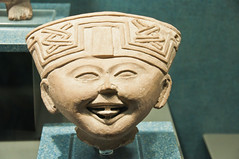
 

Museum of Anthropology (42 of 64) by GOC53, on Flickr

Creative Commons Attribution 2.0 Generic License  by  GOC53 

Library Locations

Eli M. Oboler Library
850 South 9th Avenue
Pocatello, Idaho 83209-8089
Phone: (208) 282-2958

ISU Library - Idaho Falls
1776 Science Center Drive, Room 250
Idaho Falls, ID 83402
Phone:  (208) 282-7906

ISU Library - Meridian
1311 E. Central Drive, Room 844
Meridian, ID 83642
Phone: (208) 373-1817

Subject Guide

Profile Photo
Cheryl Sebold
Contact:
Eli M. Oboler Library
Idaho State University
850 South 9th Avenue
Mail Stop 8089
Pocatello, Idaho 83209
Room 163
208-282-3246
Subjects: Anthropology

Anthropology & Archaeology in Science Daily (RSS)

  • A lost Amazon world just reappeared in BoliviaThis link opens in a new window Nov 30, 2025
    Researchers exploring Bolivia’s Great Tectonic Lakes discovered a landscape transformed over centuries by sophisticated engineering and diverse agricultural traditions. Excavations show how Indigenous societies adapted to dynamic wetlands through raised fields, canals, and mixed livelihoods. Today’s local communities preserve this biocultural continuity, guiding research and conservation.
  • 242-million-year-old mini predator changes lizard evolutionThis link opens in a new window Nov 30, 2025
    A tiny 242-million-year-old fossil from Devon is shaking up scientists’ assumptions about the earliest members of the lizard lineage. Instead of the expected skull hinges and palate teeth typical of modern lizards and snakes, this ancient creature shows a surprising mix of primitive and unusual traits—along with strikingly large, blade-like teeth. High-resolution synchrotron scans revealed details invisible to the naked eye, helping researchers name the new species Agriodontosaurus helsbypetrae and rethink the origins of lepidosaurs, the diverse group that now includes more than 12,000 species.
  • Dinosaur mummy found with hooves and a hidden crestThis link opens in a new window Nov 30, 2025
    Scientists have reconstructed the most complete and lifelike profile of Edmontosaurus annectens thanks to an extraordinary preservation process called clay templating, in which a thin clay film captured the dinosaur’s skin, scales, spikes, and even hooves in three dimensions. By combining newly excavated “mummies,” advanced imaging, and artistic reconstruction, researchers revealed a tall crest, a single row of tail spikes, delicate pebble-like scales, and—most remarkably—the earliest known hooves in any land vertebrate.
  • A backwards Bible map that changed the worldThis link opens in a new window Nov 30, 2025
    Five hundred years ago, a Bible accidentally printed with a backwards map of the Holy Land sparked a revolution in how people imagined geography, borders, and even nationhood. Despite the blunder, the map reshaped the Bible into a Renaissance book and spread new ideas about territorial organization as literacy expanded. Over time, sacred geography evolved into political boundary-making, influencing not only early modern thought but modern attitudes about nation-states.
  • A strange ancient foot reveals a hidden human cousinThis link opens in a new window Nov 28, 2025
    Researchers have finally assigned a strange 3.4-million-year-old foot to Australopithecus deyiremeda, confirming that Lucy’s species wasn’t alone in ancient Ethiopia. This hominin had an opposable big toe for climbing but still walked upright in a distinct style. Isotope tests show it ate different foods from A. afarensis, revealing clear ecological separation. These insights help explain how multiple early human species co-existed without wiping each other out.
Get Online Access Support
• Eli M. Oboler Library • 850 S. 9th Avenue • Stop 8089 • Pocatello, Idaho, USA 83209 • Site Feedback - Library Webmaster
Licensing Restrictions for Use of Electronic Resources